 396
396
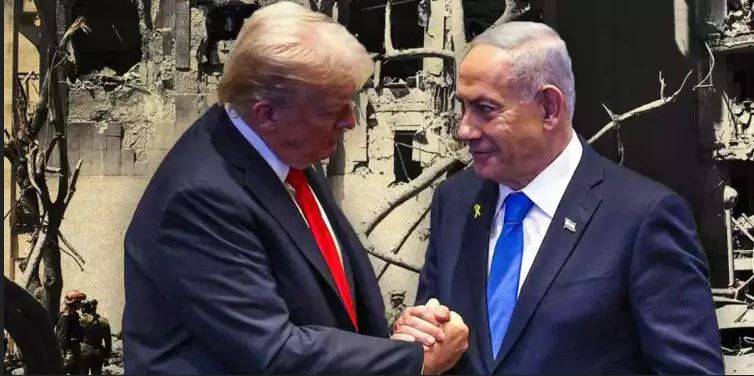
Israeli Prime Minister Benjamin Netanyahu and U.S. President Donald Trump are expected to meet in the near future, at a time when uncertainty is growing over the next phase of the Gaza ceasefire agreement. The anticipated meeting has triggered a wave of analyses and speculation among media outlets, political analysts, and informed sources.
What is clear is that Netanyahu is seeking to reinforce his domestic political standing and secure renewed American backing at a moment when he is facing intense internal criticism. At the same time, Trump himself is under growing pressure in the United States for supporting Netanyahu’s militaristic policies. As Trump and Netanyahu prepare for their sensitive meeting at the Mar-a-Lago residence in Florida, divisions between the Israeli prime minister and Trump’s inner circle over the future of the Gaza war and the broader peace process have become more visible than ever. According to White House officials, these rifts have significantly eroded Netanyahu’s popularity and influence within Trump’s core team.
From the White House perspective, the meeting is seen as an opportunity to extract political value and showcase a major diplomatic achievement for Trump. Continued coordination with Israel on exerting comprehensive pressure on Iran is also among the issues likely to be discussed during the visit.
Washington is, in fact, eager to unveil plans for the formation of a technocratic Palestinian government and the deployment of an international stabilization force in Gaza as soon as possible. There is even speculation that a “peace delegation,” led by Trump himself, could be formally announced in late January at the World Economic Forum in Davos.
Trump’s special envoy Steve Witkoff and his senior adviser and son-in-law Jared Kushner—working alongside Egypt, Qatar, and Turkey—are reportedly finalizing arrangements to facilitate the implementation of the second phase of the ceasefire agreement. This phase would include Hamas relinquishing its weapons and Israeli forces withdrawing from Gaza. However, according to an informed source, Netanyahu recently expressed serious reservations about Witkoff and Kushner’s proposals—particularly regarding the demilitarization of Gaza—during a meeting with Senator Lindsey Graham in Jerusalem.
A senior Israeli official described the upcoming meeting as critical, noting: “It is unclear whether Trump fully aligns with Witkoff and Kushner. Netanyahu is trying to convince just one person. The question is whether Trump will ultimately side with him or with his senior advisers. No one knows what Trump will decide.”
According to White House officials, it was Netanyahu who initially proposed the meeting during a phone call on December 1. At first, Trump was uncertain whether another meeting with Netanyahu—his fifth since returning to power—was necessary so soon. Over time, however, the meeting came to be seen as beneficial for the White House as well, particularly ahead of the formal announcement of the ‘Gaza Peace Initiative’ expected in January.
The White House believes that regional opportunities for Israel remain significant, yet it also acknowledges the severe damage inflicted on Israel’s international standing after two years of war. Additionally, the heavy blows suffered by Israel and its military during confrontations with Iran are a serious concern for Washington as Israel’s primary backer.
Iran is therefore expected to feature prominently in the discussions. Since late December 2025, Israeli and U.S. strategies toward Iran appear to have increasingly diverged as risks have escalated. Israeli security officials warn that Iran’s recent missile activities may go beyond exercises and signal operational readiness. Washington, however, views the same intelligence through a broader lens, weighing the risks of escalation beyond Israel’s borders—including potential attacks on U.S. forces and disruptions to global energy markets.
Meanwhile, domestic divisions within the United States are deepening. Republicans such as Jim Risch emphasize that this is Israel’s war, not America’s, while Democrats like Hakeem Jeffries and Alexandria Ocasio-Cortez argue that unauthorized military strikes violate the U.S. Constitution. Although the Trump administration seeks to project resolve while limiting the scope of confrontation, Democrats and constitutional-minded Republicans alike view the June attacks as unlawful and inconsistent with war powers legislation.
As a result, discussions are expected to focus heavily on disagreements over how to implement the next phase of the U.S.-brokered Gaza agreement. These disagreements include potential security arrangements and mounting domestic political pressure on Netanyahu from far-right members of his governing coalition, who oppose any further Israeli withdrawal from Gaza. White House officials have expressed concern about the risk of renewed fighting—concerns fueled by growing frustration with Netanyahu and doubts about Israel’s intentions.
The outcome of this meeting could have broader regional implications, as mediators and guarantors continue their efforts to prevent a return to full-scale war. Israel has deliberately delayed the peace process, and since the ceasefire came into effect, more than 400 Palestinians have been killed as a result of Israeli gunfire, airstrikes, and shelling.
In conclusion, Netanyahu’s visits to the United States over the past 15 years have typically been “symbolic-strategic” in nature—designed less to produce immediate, concrete agreements and more to send political, security, and deterrence signals. This visit will likely follow the same pattern, with one crucial difference: today, Netanyahu appears more battered, weakened, and politically vulnerable than ever before. He has crossed red lines whose consequences have become problematic even for the White House. In this sense, the trip resembles a battered child seeking refuge with a parent after being struck.
Translated by Ashraf Hemmati from the original Persian article written by Hakimeh Zaeem Bashi
4. https://www.newarab.com/news/netanyahu-meet-trump-amid-growing-us-frustration-israel?utm_source=chatgpt.com

Comment
Post a comment for this article