 990
990
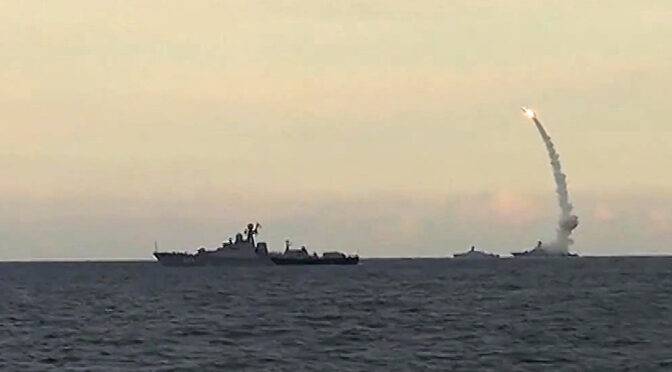
In recent days, reports have emerged alleging a breach of security in the Caspian Sea. According to unverified claims circulated by Ukrainian media outlets, actors allegedly operating under Ukrainian direction targeted two Russian vessels in the Caspian Sea.
Based on these contradictory and unconfirmed reports, the operation was reportedly carried out through coordination between Ukraine’s air force, special operations units, and a resistance network known as the “Black Spark Center.” The vessels—identified as Composer Rachmaninoff and Asker-Saria —were allegedly attacked near the coast of the Republic of Kalmykia. Ukrainian sources claim that these ships were transporting military equipment from Iran to Russia.
At the outset, it is essential to emphasize that the Caspian Sea has historically been regarded as a low-tension maritime zone under the collective control of its littoral states. Under the 2018 Convention on the Legal Status of the Caspian Sea—signed by Iran, Russia, Kazakhstan, Azerbaijan, and Turkmenistan—the Caspian is formally defined as a space of neighborhood, cooperation, and friendship. The convention explicitly prohibits the presence of foreign military bases and military operations by non-littoral states. Signatory countries committed themselves to upholding the principles of sovereignty, territorial integrity, and peaceful use of this unique body of water.
To date, the security of the Caspian Sea has been the most important shared interest among these five states. Any incident of this nature therefore represents a serious erosion of regional security and signals the spillover of tensions from the Ukraine conflict and the Black Sea into the Caspian basin. Such developments threaten commercial cooperation, logistical corridors, and the broader strategic interests of Caspian littoral states.
Recent events point to a significant shift in the rules of so-called “shadow warfare” and indicate an expansion of its geographical scope. Previously, indirect confrontations were largely confined to gray zones with a history of instability—such as Syria, the Red Sea, or the Eastern Mediterranean. Extending these dynamics to the Caspian Sea dramatically raises strategic risk levels in one of the world’s most distinctive and sensitive maritime spaces.
As a result, a region long considered stable and secure is now, under the shadow of the Ukraine war, being portrayed as a potential arena for Ukrainian drone operations against Russian interests.
Targeting Russian vessels in the Caspian Sea under claims of transporting Iranian weapons does more than violate regional security norms. It carries far-reaching legal and security implications, potentially forcing Caspian littoral states to reassess their defense doctrines. Ultimately, this trajectory risks accelerating military competition, arms buildup, and the broader destabilization of regional security.
Under the Caspian Convention, the sea is defined as a body of water with a special legal regime—neither a sea nor a lake. Any breach of its security framework risks escalating conflicts and undermining the fragile security agreements that have governed the region for decades.
From a strategic perspective, any attack on Russian vessels in the Caspian sends a direct and unmistakable message to Moscow as the dominant power in this maritime domain. It appears designed to demonstrate the capacity to exert pressure deep within Russia’s traditional sphere of influence. With the rules of shadow warfare shifting, Russia’s strategic depth is being challenged—making a direct response from Moscow in the near term highly likely. Historically, the Caspian Sea has been regarded as an uncontested zone of Russian influence, and any attempt to destabilize it carries significant consequences.
Even if these Ukrainian actions remain unverified, the mere plausibility of such an operation underscores a critical reality: shadow warfare is no longer confined to specific theaters. It can extend into new regions previously considered immune from direct confrontation. Consequently, the future stability of the Caspian Sea now depends more than ever on strengthening collective security mechanisms, preventing external destabilization, and resisting efforts to transform this maritime space into an arena for extra-regional power struggles.
Only through active regional diplomacy and coordinated security policies can a recurrence of such incidents be prevented. Otherwise, the costs of insecurity will inevitably be borne by all Caspian littoral states—and the negative political and security repercussions will extend well beyond the region itself.
Translated by Ashraf Hemmati from the original Persian article written by Navid Daneshvar
[1] https://www.pravda.com.ua/rus/news/2025/12/12/8011534/
[1] https://euroradio.fm/ru/tenevoy-flot-rossii-mogut-li-morskie-vsu-i-sankcii-es-potopit-ego-efir

Comment
Post a comment for this article