 639
639
The United Kingdom’s healthcare structure, long praised as one of the world’s most advanced and exemplary systems, has in recent years been increasingly strained by persistent pressures and escalating challenges. Political decision-making and at times non-expert policymaking have significantly damaged the system, pushing it into a prolonged period of decline. Without substantial reforms in governmental approaches and strategies, the symbol of British public health and its once-shining jewel may face collapse within the next decade.
As the government of Keir Starmer prepares to announce its autumn budget, it is confronted with major financial pressures that demand immediate solutions. One of the most critical areas is the health sector, where a budget gap exceeding 3 billion pounds has emerged. In fact, three major financial pressures not accounted for in the budget have placed considerable strain on the country’s healthcare structure and, if left unaddressed, are certain to develop into a full-scale crisis.
The first challenge concerns the cost of workforce reductions and restructuring. In March 2025, following the approval of the national budget, the UK government mandated cuts in administrative spending for ICBs and NHS trusts, a move requiring more than one billion pounds to fund the planned layoffs. With the government refusing to provide the initial budget for these reductions, NHS managers have been unable to implement the program and will likely be forced to introduce cuts in other areas, such as reducing non-emergency services or shortening operational hours for certain clinics. These actions could directly affect patient care in both the short and long term. Experts warn that such measures may weaken service quality, including access to surgeries and diagnostic tests, and increase pressure on already-strained healthcare staff.
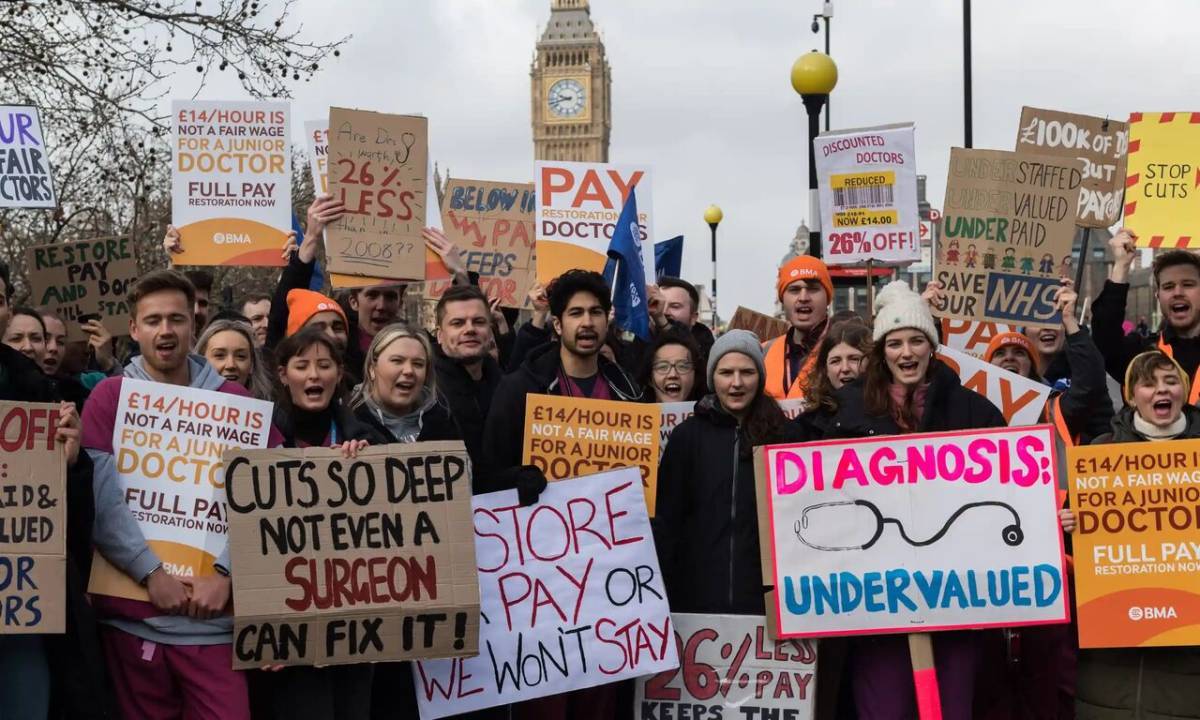
The second key issue is the recurring strikes by British doctors. Since March 2023, the British Medical Association (BMA) has organized several rounds of industrial action, the latest of which in November 2025 lasted five days. Estimates indicate that the five-day strike in July 2025 alone cost the NHS around 300 million pounds and resulted in the cancellation or rescheduling of more than 54,000 medical appointments and procedures, although the NHS succeeded in maintaining over 90 percent of its planned activities. These disruptions have jeopardized patient waiting-time standards, including the 18-week target for scheduled care, leaving many patients waiting significantly longer for treatment. This not only impacts health outcomes but also increases long-term insurance and healthcare costs. Yet the root cause of dissatisfaction among doctors appears not to be salaries alone, which have seen substantial increases over the past three years. Rather, the key issue is the overwhelming workload borne by physicians and nurses, combined with inadequate support programs. A Royal College of Physicians survey shows that one-third of doctors are considering working abroad. Their primary reasons include better financial incentives, improved working conditions, and healthier work-life balance. Destinations such as Australia and Canada, which offer higher annual incomes with fewer working hours, have become especially attractive.
A third and increasingly serious threat to the NHS budget is the rising cost of pharmaceuticals. The US government’s push to revise NICE’s value-assessment criteria for medicines has imposed additional financial burdens on the NHS. Although the UK had previously rejected the pharmaceutical industry’s request for an annual 2.5-billion-pound increase in drug prices, recent developments suggest that a compromise is close, and a portion of these added costs will be applied this year.
The combination of these three financial pressures—workforce restructuring costs, industrial strikes, and rising drug prices—has created a heavy burden that the NHS cannot absorb without substantial government support. NHS leaders warn that without adequate funding, services will inevitably be cut, and patient waiting lists will grow even longer. Such reductions could directly affect tax revenues and unemployment costs, as many untreated patients will be unable to work.
Despite recent investments by the government, including 29 billion pounds allocated to the NHS and 10 billion pounds dedicated to digital transformation, inefficiencies in resource allocation and reform implementation have prevented the system from achieving optimal productivity. The strikes and unexpected financial pressures demonstrate that the government has yet to establish a practical and sustainable strategy to maintain the NHS’s performance.
Ultimately, the current NHS crisis is the direct result of ineffective decision-making and a lack of transparency in governmental planning. Without genuine reforms and timely financial support, the quality of healthcare services across Britain will deteriorate, and public access to medical care will be increasingly restricted. This will seriously threaten population health while imposing massive long-term costs on the government. The future of the NHS depends directly on the government’s ability to secure sufficient funding, manage human resources effectively, and implement realistic reforms; otherwise, the ongoing crisis could lead to long-term damage and potentially even the collapse of the healthcare system and public trust within the next decade.
Translated by Ashraf Hemmati from the original Persian article written by Amin Mahdavi
[1] https://www.england.nhs.uk/long-read/financial-performance-update-27-march-2025
[1] Strikes could result in NHS cutting staff or services, health leaders warn
[1] https://www.nhsconfed.org/news/pay-redundancies-or-risk-waiting-times-rising-nhs-confederation-and-nhs-providers-warn

Comment
Post a comment for this article