 23
23
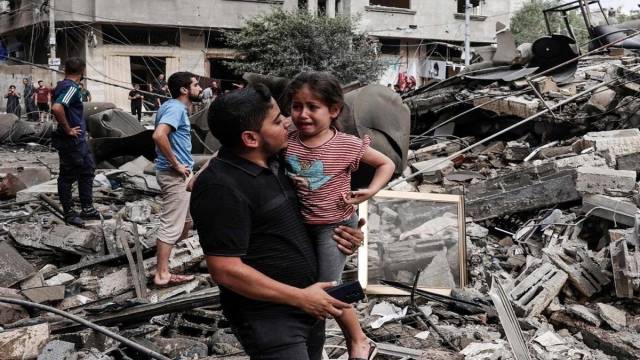
In recent months, Israel has openly violated the ceasefire it agreed to on October 11, 2025, in Gaza. Airstrikes have resumed. Palestinian civilians—particularly women and children—continue to be killed. Simultaneously, Israel has expanded its control on the ground, disregarding both the spirit and the letter of the truce.
Yet international reaction has been conspicuously muted. Neither major international institutions nor the White House have issued decisive condemnation over repeated violations. Other governments have largely remained silent. The United Nations, too, has limited itself to restrained rhetoric. Meanwhile, global media attention has shifted elsewhere.
According to the Palestinian Ministry of Health in Gaza, 601 people have been killed in the territory since the ceasefire took effect on October 11, 2025. Death in Gaza, however, does not result solely from airstrikes. Collapsed buildings, unexploded ordnance, flooding, hypothermia, hunger, and disease have compounded the humanitarian catastrophe. Civilians remain without adequate shelter, reliable food supplies, heating systems, electricity, or clean drinking water.
Beyond direct military operations, Israel has been accused of violating the ceasefire through restrictions on humanitarian access. The entry of aid trucks has been limited. Supplies of essential medicines, tents, construction materials for shelter, and mobile housing units remain insufficient. Access for international organizations attempting to provide relief has been restricted. New regulatory procedures have reportedly complicated NGO registration, while repeated permit denials have constrained humanitarian operations.
At the same time, Palestinian civil initiatives attempting to alleviate suffering face shrinking financial support. For example, the Samir Project—a donation-based initiative providing material assistance to impoverished families and students—has reportedly lost a significant portion of its donors following the ceasefire announcement. Its director, Dr. Ezzeddin al-Loulou, has confirmed that declining financial flows have impaired the organization’s ability to deliver essential aid.
The Rafah crossing remains effectively closed. Palestinians seeking to leave Gaza face severe restrictions. Those requiring urgent medical treatment—estimated at more than 16,000 individuals—are reportedly unable to exit unless they pay substantial sums to intermediaries and accept conditions that may prevent their return.
In this context, some observers argue that Gaza has entered a new phase of destruction—less visible than large-scale bombardment, yet equally consequential. The ceasefire has not translated into durable protection for civilians. Instead, it has coincided with diminished global scrutiny. As international attention shifts toward other geopolitical crises—U.S.–China tensions, the war in Ukraine, U.S.–Venezuela frictions, and renewed U.S.–Iran negotiations—the Palestinian issue has receded from headline prominence.
This shift exposes a broader structural problem: the absence of enforceable international mechanisms capable of ensuring compliance. Condemnations, when issued, have remained largely symbolic. As long as public attention was intensely focused on Gaza, diplomatic criticism was more pronounced—though rarely accompanied by binding action. As attention wanes, even rhetorical pressure has softened.
The widening gap between international normative language and political reality has become increasingly visible. Israel continues to consolidate its position on the ground while key allies express concern yet refrain from decisive measures. Without substantive change in international policy, the trajectory may point toward the entrenchment of a de facto single-state reality defined not by equal rights but by asymmetrical control.
The ceasefire, in effect, has failed to halt the structural dynamics of conflict. Gaza remains under severe strain—militarily, economically, and humanitarianly. The question now is not only whether violence will escalate again, but whether international actors are prepared to move beyond declaratory politics toward enforceable commitments.
Until then, Gaza remains caught between declared truce and lived devastation—under fire, and increasingly, out of sight.
Translated by Ashraf Hemmati from the original Persian article written by Hakima Zaeimbashi
3. https://www.tehrantimes.com/news/523684/Condemnation-without-consequences-Western-complicity-in-Israel-s

Comment
Post a comment for this article