 723
723
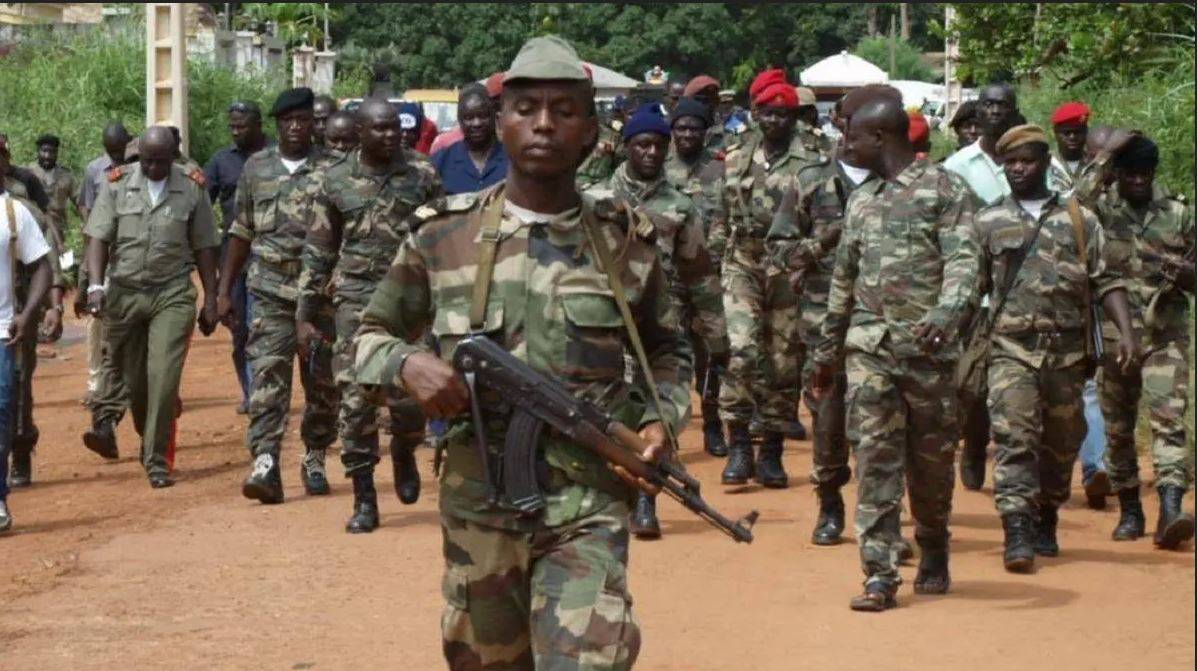
In recent days, the news of a coup in Guinea-Bissau has once again drawn attention to the chronic instability of governments across the African continent. Political volatility has plagued many African states for decades, and the latest upheaval in Guinea-Bissau occurred as the country was in the middle of its presidential election process. Following the coup, national borders were closed and President Umaro Sissoco Embaló was removed from power. Security analysts argue that the event may signal the beginning of a new proxy conflict in the country and the onset of broader instability in West Africa.
This development is not simply a shift of power in a small African state. It must be understood within the broader context of the escalating competition between China and the United States for influence in Africa. Today’s geopolitical contest in the continent is a proxy struggle for control over Africa’s vast natural resources and strategic geography. The Western-designed post-World War II order that had been imposed upon African states is increasingly unsustainable, and Eastern powers are determined to secure these countries within their own sphere of influence as the international system moves toward a new multipolar structure. In this context, the coup in Guinea-Bissau could prove to be a significant turning point. The country’s withdrawal from ECOWAS and its alignment with the “Eastern” bloc signifies a gradual distancing from American and French influence, and a shift toward cooperation with China, Russia, and the emerging multipolar order.
Coups as Tools in the China–US Power Contest
The wave of coups in Central and West Africa, reflected in nine such events in recent years, is largely the product of great-power rivalry. For external actors, the key objective in these power struggles is securing strategic leverage. African countries, endowed with immense natural resources, become instruments of global power competition. The stakes are so high that entrenched political orders in African states are routinely disrupted, often through violent restructuring, with national armies playing the decisive role in redistributing power.
Why the Eastern Bloc Is Gaining Ground in Africa
China: Massive infrastructure investment and trade without political preconditions
Russia: A cheaper and more effective security model for fragile governments
United States and France: Declining credibility due to failures in counterterrorism and internal economic challenges
Eastern powers hold a natural advantage because they do not approach Africa with a sense of civilizational superiority. Moreover, the collective memory of colonialism, slavery, and exploitation has left deep mistrust toward Western actors. As a result, African nations tend to view Eastern engagement far more favorably than a continuation of Western-dominated order.
Geopolitical Consequences of the Coup
Although Guinea-Bissau is a small country, its shift toward the Eastern bloc disrupts the longstanding Western balance of power in the Gulf of Guinea and strengthens the China–Russia axis in West Africa. With the establishment of a new government, there is a strong possibility that neighboring states may experience similar political realignments. The ripple effect of a single coup can easily spill over into adjacent countries, potentially triggering a domino effect throughout Central Africa. Governments that have survived solely through Western security backing, without genuine domestic legitimacy, are now increasingly vulnerable.
Conclusion
The coup in Guinea-Bissau occurred at a time when Western countries, particularly the United States and France, were actively trying to support pro-Western governments across Africa. Yet the fragility of these governments and their reliance on external military support make them highly susceptible to sudden collapse. The Guinea-Bissau coup will not be the last. Given the current geopolitical landscape, more coups across the continent should not come as a surprise.
Translated by Ashraf Hemmati from the original Persian article written by Amir Ali Yeganeh

Comment
Post a comment for this article