 37
37
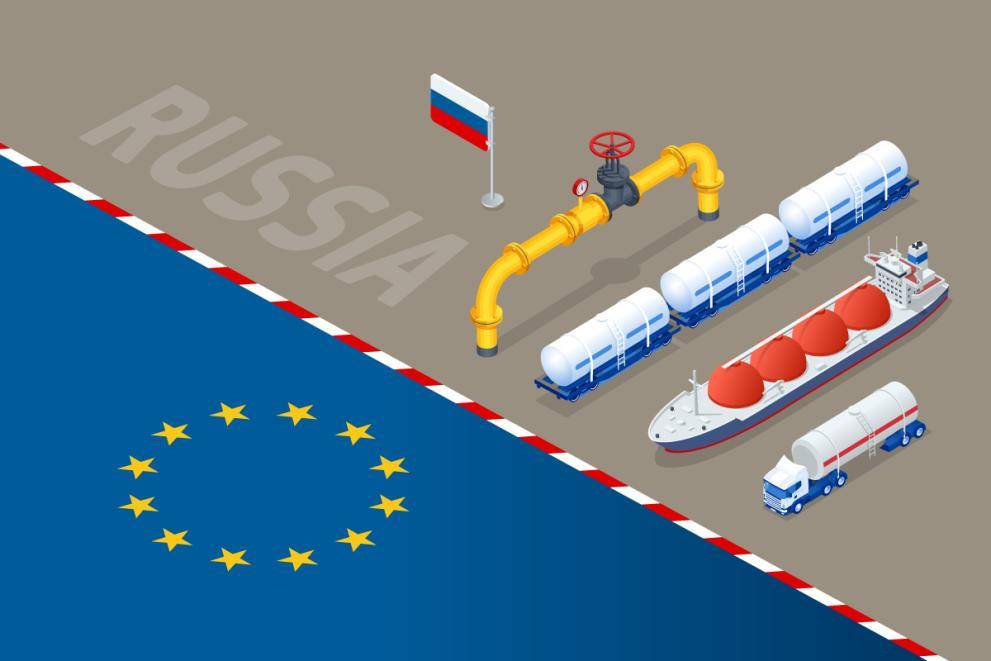
In recent years, following the start of the Russia-Ukraine conflict and the subsequent launch of the special military operation by Russian forces, Russia's gas exports to Europe—once its largest and most profitable market—have faced a massive and sudden decline. This has ultimately led to an unprecedented plummet in the volume of gas supplies to the European continent. The primary cause of this collapse is the closure of the Ukrainian transit route, leaving only one active pipeline, TurkStream, which itself serves a limited number of clients.
Russia was formerly considered Europe's largest and most crucial gas supplier. Russian gas exports to Europe began in 1973 when the Soviet Union delivered 6.8 billion cubic meters of gas under its first export contracts. By 2018-2019, these exports had surged to their peak of around 180 billion cubic meters, generating tens of billions of dollars in profit and revenue for Gazprom and the Russian state. However, in 2025, these exports have plummeted by approximately 44%, reaching their lowest level since the early 1970s. This figure signifies the collapse of a strategic market for Moscow and the consequent loss of its traditional and lucrative European market.
Meanwhile, Europe's efforts to reduce its dependency on Russian energy have led to a decision that the European Union will halt these imports by 2027. Nevertheless, significant challenges are likely to persist for the residents of the continent. The EU is now continuously working to diminish its reliance on Russian gas, aiming to replace it with supplies from countries such as Azerbaijan, Africa, the United States, and Norway. However, experts warn that achieving this goal requires precise coordination, development and modernization of infrastructure, and market management to prevent supply disruptions and price surges.
According to energy analysts, Gazprom's total supply in 2025 was a mere 18 billion cubic meters, delivered solely via the subsea TurkStream pipeline. This export slump has had a direct impact on state revenues and the profitability of Russia's Gazprom. Particularly under conditions of war and sanctions, this signifies a crisis for Gazprom, weakening it and imposing further pressure on the Russian federal budget. For the third consecutive year, the Russian government is experiencing a severe shortfall in gas export revenues, with Gazprom's supplies to Europe hitting their lowest point in the past half-century.
In these circumstances, even increased gas exports to China have been unable to compensate for this dramatic decline. The revenue from January to November 2025 amounted to 420 billion rubles (5.38 billion USD). This figure represents a 4% decrease in gas export revenues compared to the same period last year and a drop of roughly 17% compared to 2023. Even the deliberate reorientation of the energy market towards China, Central Asia, and other Asian regions has failed to offset the losses from this void for Russia.
Although, according to some reports, Gazprom expects gas exports to China via the Power of Siberia pipeline to reach about 38.6 to 38.7 billion cubic meters—a slight and not particularly significant increase from 2024, marginally exceeding the pipeline's planned annual capacity of 38 billion cubic meters. Available data indicates that this volume of gas transferred to China is substantially less than the former energy exports to Europe and practically lacks the capacity to compensate for the shortfall.
Ultimately, these events have led to a restructuring of the global energy landscape. Many analysts view this trend not as temporary, but as a sign of a long-term shift—a shift that weakens Russia's energy-centric power in foreign policy and will have widespread consequences for secondary suppliers and consumers.
In conclusion, it must be noted that despite European leaders' efforts to completely halt imports of Russian gas, some parts of the continent still require gas imports from Russia. However, overall, the historic decline in Russian gas exports to Europe is not a temporary issue but rather a structural, almost irreversible change in global markets and the geopolitics of energy. The latest calculations indicate that 2025 marks the endpoint of Europe's decades-long dependency on Russian gas. Russian gas exports to Europe have faced a historic collapse this year, dealing an economic blow to Moscow. What was once a source of power for Moscow has transformed into a tool for European independence, a turning point in Russia's "Pivot to the East" strategy, and a new chapter in the nexus of energy and diplomacy as we enter 2026. It stands as a clear and unequivocal sign that Europe's return to an era of gas dependency on Russia is impossible.
Translated by Ashraf Hemmati from the original Persian article written by Navid Daneshvar
[1] https://www.themoscowtimes.com/2025/12/30/gazproms-gas-exports-to-europe-fall-to-lowest-level-since-early-1970s-a91591
[1] https://www.reuters.com/business/energy/russias-pipeline-gas-exports-europe-fall-by-44-lowest-decades-2025-12-30
[1] https://www.themoscowtimes.com/2025/12/23/russias-gas-export-revenues-set-for-third-straight-year-of-decline-a91527

Comment
Post a comment for this article