 406
406
Few would have imagined that one of the long-term consequences of the Russia–Ukraine war would be a fundamental shift in Switzerland’s long-standing doctrine of neutrality. For more than two centuries, Switzerland positioned itself as a neutral actor within the international system. Today, however, it appears that Bern is pursuing deep and consequential changes in its defense and security doctrine.
While Switzerland continues to emphasize neutrality — at least rhetorically — it is simultaneously moving to modernize its military capabilities in order to confront the realities of modern warfare and emerging threats. This shift marks a profound departure from the country’s traditional strategic posture.
The transformation of Switzerland’s doctrine delivers a serious blow to liberal institutionalism in the contemporary era. It can be interpreted as a symbolic end to the dominance of liberal institutionalism in the global order and a clear return to realism. For decades, Switzerland relied on institutionalist principles rooted in international law to preserve order and stability, maintaining neutrality as a foundational policy. Yet Swiss policymakers now appear to have concluded that neutrality alone no longer guarantees security in a rapidly evolving international system.
Under these conditions, Switzerland has embraced the logic of self-help. Neutrality, from this perspective, is only effective when it is recognized and guaranteed by surrounding powers. Without such guarantees, states must maintain credible military and defensive capabilities. Accordingly, Bern is seeking to reinforce its neutral status by strengthening its armed forces and upgrading its defensive arsenal.
A key concern highlighted by Swiss defense officials is the urgent need to modernize the military, reinforce defensive readiness, and improve training structures. According to the Swiss army commander, the armed forces are currently capable of fully equipping and preparing only about one-third of their personnel for combat. This stark admission underscores structural weaknesses within the Swiss military and reinforces the idea that neutrality, under such conditions, can shift from a security asset to a strategic vulnerability — unless it is backed by reliable deterrence capabilities.
Since the outbreak of the Ukraine war, Switzerland has increased its defense budget and aims to raise military spending to one percent of its gross domestic product. This move reflects Europe’s deepening security dilemma and Switzerland’s desire to maintain the ability to defend itself independently. The budget increase aligns with the broader doctrinal shift, as Swiss political and military leaders have concluded that credible deterrence requires tangible power.
Within this framework, Switzerland’s acquisition of new armored systems and fifth-generation F-35 fighter jets reflects the reality that changing doctrine necessitates changing tools. For decades, Swiss defense strategy was based on a “hedgehog” model — static, terrain-focused, and tailored to the country’s mountainous geography. However, modern threats and evolving forms of warfare have rendered this approach insufficient.
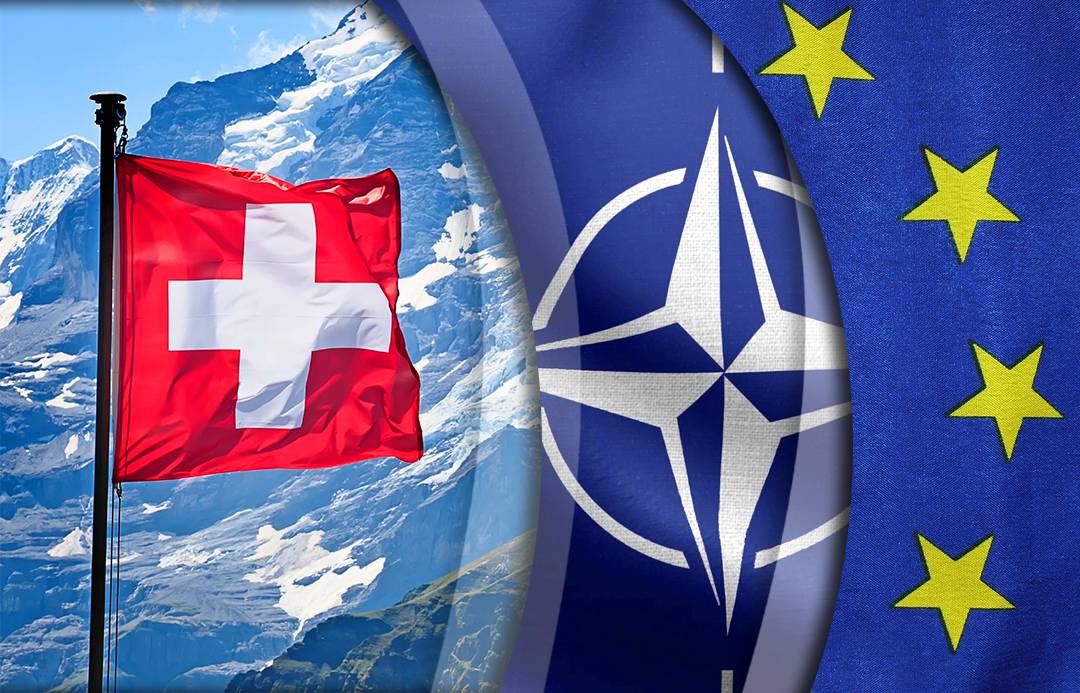
The purchase of mobile artillery systems indicates a shift toward “shoot-and-scoot” tactics designed to enhance deterrence and survivability. Meanwhile, the acquisition of F-35 fighter jets represents more than a simple upgrade of air power. It effectively integrates Switzerland into a broader European and NATO-linked intelligence and security network. Without formally joining NATO, Switzerland gains access to its security umbrella — a strategic compromise that preserves formal neutrality while aligning operationally with Western defense structures.
Switzerland’s participation in the European Sky Shield Initiative further underscores this shift. By aligning itself with France, Germany, Italy, and the broader Western European security architecture, Bern has implicitly acknowledged that classical neutrality has lost relevance in Europe. What is emerging instead is a form of adaptive neutrality shaped by national interests and regional security realities.
This security alignment is not purely military in nature; it is also underpinned by shared political values and cultural orientations with Western allies, which has eased Switzerland’s integration into these frameworks.
In sum, recent developments indicate that Switzerland is redefining neutrality — moving away from an absolute normative principle toward a conditional, capability-based strategy. The country is attempting to balance political independence with Europe’s evolving security realities. From a realist perspective, this represents an effort to reassert Switzerland’s relevance in a transforming international system. From a security standpoint, it signals gradual integration into regional defense patterns — a trajectory Switzerland had long resisted.
Neutrality in Switzerland has not disappeared. However, it is no longer the classical neutrality of the twentieth century. What is taking shape is a model of armed, intelligent neutrality aligned with geopolitical realities — a model that demonstrates that even the world’s most neutral states cannot escape the logic of power and security, not even in Europe.
Translated by Ashraf Hemmati from the original Persian article written by Amin Mahdi
[1] Army chief says Switzerland can't defend itself from full-scale attack | Reuters
[1] Cost Overruns Push Swiss to Buy Fewer F-35s
[1] Switzerland breaks tradition on arms exports, tests neutrality in Ukraine war - Brussels Signal

Comment
Post a comment for this article