 22
22
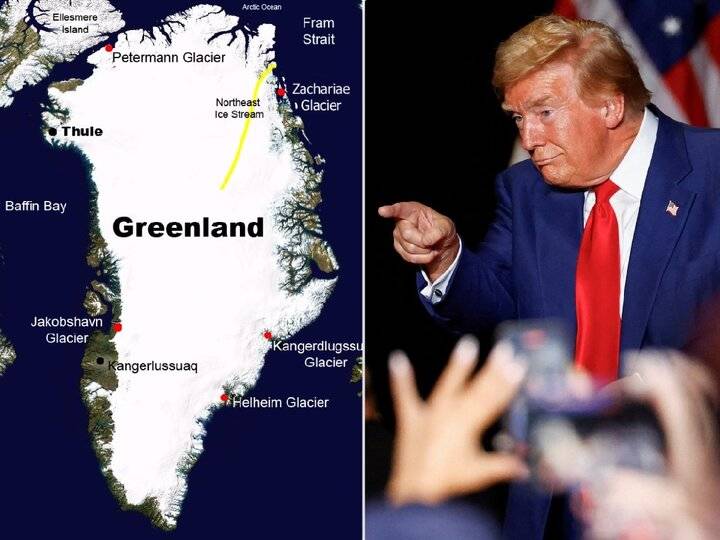
Greenland, a territory in the North Atlantic bordering the Arctic, languished on the periphery of global developments for decades. However, in the context of the current transitional phase of the international order, this region has now captured the attention of major powers. This newfound focus has sown seeds of anxiety among the island's inhabitants about their future. It appears Greenland is destined to be one of the pivotal regions in the future global system, and its people must prepare for significant challenges.
Within the framework of efforts by great powers like the United States, China, Russia, and the European Union to shape their positions in the post-2030 order, their attention is drawn to locations that may hold strategic significance in the future. It is precisely this perspective that has elevated Greenland's importance—an island at the communicative crossroads between the Arctic, Europe, and America.
Even China, under the pretext of proximity to the Arctic, seeks to increase its influence in this region. Greenland's strategic position is such that any country dominating it could gain substantial bargaining power against others. This strategic importance has prompted the United States government, within its new doctrine, to view this region with particular focus.
As America seeks to augment its power and global influence to preserve its post-2030 hegemony, Greenland represents a crucial instrument of control for them. Through this island, they maintain sufficient leverage over Russia, can pressure Europe, and most importantly, possess a strategic tool to contain China in the Atlantic.
The United States can enhance its speed and deterrence power against China and Russia by deploying early-warning radar systems. Installing advanced systems such as radars or other espionage tools allows America to distance itself from the possibility of a surprise attack by rivals and acquire the necessary preparedness for confrontation. This is especially pertinent since Russia has deployed its missiles on Poland's border, and there is also a possibility it may seek to position its missile systems near the Arctic to gain greater leverage—a move that could pose a potential threat to the US.
Therefore, to preserve its superiority, America needs a strategic foothold in the Arctic, and Greenland could be that crucial point. This is particularly true given that the US already has the Thule Air Base in this region, allowing it to enhance its combat capabilities at a lower cost compared to its rivals. This base has long held importance for America, enabling it to monitor and analyze Russian and Chinese military programs in the domain.
It must be considered that in the current logic of great powers, dominating strategic points is essential for preserving power in the future. Within this framework, America's actions can be examined; its view of Greenland is not solely security-focused but also considers its importance in maritime economy, sea lane dominance, and rare resources.
This region has the potential to become a cost-effective, crucial maritime route and could replace important waterways like the Suez Canal. Alongside the possibility of exploring and exploiting fossil fuel resources, the region also possesses scarce resources such as zinc and uranium, adding to its economic significance. Any country that can dominate this region will reap substantial economic advantages.
This perspective has led the United States to feel anxious about China's economic presence and Russia's military presence in areas near the Western Hemisphere. It sees expanding its own borders and sphere of influence in the Western Hemisphere as the best course of action, and efforts to secure Greenland align with this goal.
In essence, America is striving to increase its economic and political power for the coming decade, and within this framework, Greenland could be both an economically valuable base and a politically significant victory for them.
After witnessing the seriousness of its European allies regarding Greenland, the United States retreated from a stance of military aggression. However, this does not mean they are not seeking to expand their military presence in this territory. Rather, they are pursuing a mechanism to acquire this strategic region at minimal cost.
In this pursuit, they have increased pressure on Europe and, in practice, pay little heed to the decision-making power of Europe and the Danish government. This issue once again demonstrates that in the post-2030 order, Europe is not a strategic ally for America; alliance with Europe is merely for securing America's temporary and tactical interests in the evolving international system. Thus, America has no fear of weakening European sovereignty with its decisions.
In summary, it must be said that among the predicted future scenarios, the likelihood of a referendum or joining specific agreements with the United States is more prominent than others. Here, the United States could employ methods similar to Russia's in swaying public opinion and achieve success in garnering popular support. Simultaneously, China and Russia will not sit idly by; a heavy barrage of disinformation will reach the people of Greenland. The question remains: who, and with what strategy, will ultimately dominate this key territory? A territory that may become one of the most critical regions in the world in the post-2030 order.
Translated by Ashraf Hemmati from the original Persian article written by Amin Mahdavi
[1] www.geopolitika.it/en/usa-greenland-and-the-arctic-geopolitics-resources-and-strategic-competition-with-russia/
[1] www.csis.org/analysis/greenland-rare-earths-and-arctic-security
[1]www. sof.news/defense/strategic-importance-of-greenland

Comment
Post a comment for this article