 11
11
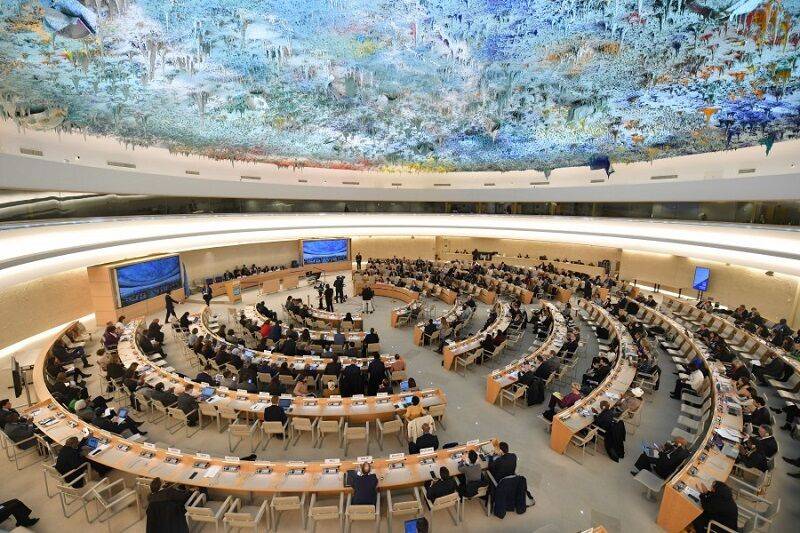
Perhaps the most important executive and monitoring human rights body of the United Nations was the Commission on Human Rights, established based on Article 68 of the UN Charter and according to Resolution No. 5 dated 1946 by the Economic and Social Council. This institution had deviated from its path and become highly politicized, essentially turning into an assembly where human rights violators conspired to cover for one another. Therefore, in 2005, upon the proposal of the then UN Secretary-General (Kofi Annan), it was dissolved and replaced by the Human Rights Council.
Over these years, the Human Rights Council has also demonstrated that, like other institutions, it serves the interests of influential Western countries. The recent Human Rights Council resolution concerning recent events in Iran and the civil, peaceful protests that were transformed into urban warfare through organized Western-Zionist calls shows that the Human Rights Council is a tool for countries of the hegemonic system and the West to achieve their foreign policy objectives.
While these same countries and the Human Rights Council showed no reaction to the Zionist regime and America's aggression against Iran, imposing a twelve-day war that led to the death of 1200 Iranians (civilians, women, and children). This issue reveals a bitter contradiction in the positions of the Human Rights Council, as matters such as political pressure, deterrence, and sanctions have in practice led to violations of the basic rights to life, dignity, and health of the Iranian people, yet these issues hold no importance for the Council. Therefore, Iran has questioned the legitimacy of the resolution, stating that the motivation behind it is not human rights issues but rather political, constituting external interference and a violation of Iran's national sovereignty.
The main argument is that countries that impose inhuman sanctions against a nation and remain silent regarding the attacks of the Israeli regime and its human casualties cannot be defenders of human rights. For them, human rights are, in reality, selective.
Reports in recent years from reputable human rights institutions such as Human Rights Watch and Amnesty International indicate that the international community's response to human rights violations, particularly in conflicts in the West Asia region, often does not follow a uniform and non-discriminatory standard. These institutions have repeatedly emphasized that some cases of human rights violations are condemned swiftly and with high intensity, while similar or even more extensive cases are either ignored or met with a mild and ineffective response due to political considerations, strategic alliances, or geopolitical interests.
In these reports, the concept of "Selective Enforcement" of human rights is raised as one of the serious challenges of the international human rights system—a situation where consistent legal standards give way to political decision-making. Human rights institutions have warned that this double standard not only leads to the erosion of public trust in international mechanisms but also undermines the fundamental principle of the universality and equality of human rights.
Especially in conflicts such as Palestine, Yemen, Syria, and other parts of the world, these reports show that the reactions of powerful states and international institutions are not necessarily proportional to the severity of the violations, and in many cases, civilian victims are deprived of effective legal protection. From the perspective of these institutions, the persistence of such double standards reduces human rights from a global normative system to a political tool, and they emphasize that without eliminating the selective approach, the international human rights system will face a crisis of legitimacy.
Selective approaches to human rights are even observable within Western societies, particularly the United States. The United States itself is the greatest violator of human rights, a supporter and cultivator of terrorist groups worldwide, including ISIS. The CIA and Mossad are two poles of espionage, assassination, and insecurity. This country has been the driving engine of terrorist operations and human rights crimes in the West Asia region, but it now defends criminals who, in support of the hegemonic system, transformed Iran's peaceful civil protests into urban warfare and shed the blood of innocent people.
In the selective human rights approach, internal human rights standards such as freedom of expression, assembly, and protest can also be interpreted very differently. For example, American police are allowed to kill a protester or suspect if they feel threatened, even if they are not certain, and even if their mistake is proven, they are not convicted. However, Iranian police, killed and burned in the worst ways by rioters and criminals who have placed themselves among protesters, are also accused by the Human Rights Council. This is the dual, asymmetrical, and selective standard of Western human rights.
Translated by Ashraf Hemmati from the original Persian article written by Hakimeh Zaeem Bashi
1..
2. https://apnews.com/article/ddb7adab31640bb41f3aaa3e8a0b79df?utm_source=chatgpt.com
3. https://journal.unnes.ac.id/sju/ildisea/article/view/58373

Comment
Post a comment for this article