 277
277
Russia has consistently viewed the newly independent republics that emerged after the collapse of the Soviet Union as part of its vital strategic space and has sought to preserve this sphere at almost any cost. The war in Ukraine represented a direct strategic pressure on that space, forcing Moscow to act decisively to prevent its erosion.
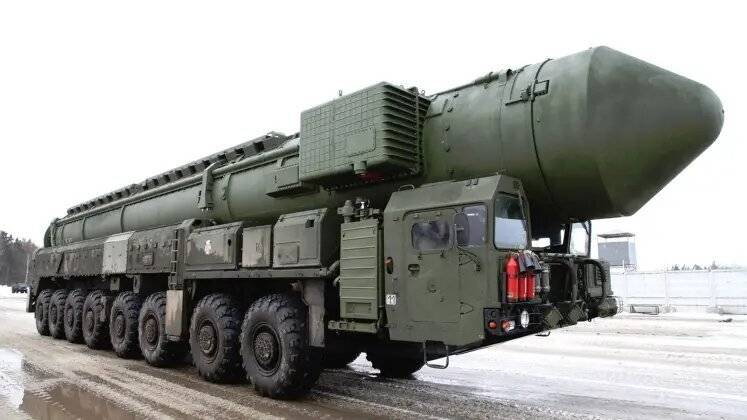
Within this framework, Russia carried out a calculated and costly move for the Western side by deploying intermediate-range Oreshnik hypersonic missiles in Belarus. These missiles, now on combat-ready status, have the potential to fundamentally alter the rules of the game in the coming years.
A Strategic Game with Europe, Not America
Russia is currently engaged in a strategic confrontation with Europe. Moscow’s approach relies on applying maximum pressure in the “grey zone” in order to gradually raise Europe’s long-term costs in sustaining the war in Ukraine. The deployment of Oreshnik missiles in Belarus should be understood as a carefully measured decision grounded in Russia’s power–cost calculus.
By stationing these systems closer to Europe, Russia significantly expands its strategic depth. Belarus’ geographical proximity means that, according to some estimates, these missiles could reach Berlin and London in under fifteen minutes—effectively neutralizing NATO’s early warning and response systems. In practical terms, NATO lacks the capability to intercept or counter these weapons in real time.
This move accomplishes several objectives simultaneously. First, it enhances Russia’s strategic depth along NATO’s eastern flank. Second, it demonstrates offensive capability near the Polish border, sharply increasing the political and security costs for European capitals contemplating further escalation.
In other words, with a relatively low-cost maneuver, Moscow has imposed disproportionately high costs on Europe—while gaining additional strategic leverage for itself.
Hypersonics and Europe’s Strategic Vulnerability
NATO’s current missile defense architecture is ill-equipped to counter hypersonic threats. Oreshnik missiles are capable of penetrating existing Patriot systems due to their speeds exceeding Mach 10 and their high maneuverability.
This creates a persistent shadow of insecurity over Europe. For Russia, however, these missiles serve as both an effective bargaining chip and a rapid-strike option if required. As a direct consequence, European states will be forced to reassess and restructure their defensive and security frameworks—an effort that will require massive new investments.
Such cost imposition is a classic tactic employed by great powers to exhaust the economic capacity and decision-making structures of their rivals. Russia is now applying this logic using the tools currently at its disposal.
Belarus, Geography, and the Suwałki Gap
Another critical dimension of this deployment is Russia’s exploitation of Belarus’ geographical position. Moscow is clearly attempting to shift the potential theater of confrontation away from its own borders and toward NATO’s periphery.
The area where these missiles are deployed lies near the Suwałki Gap—a strategic land corridor widely regarded as NATO’s Achilles’ heel. By exerting control over this corridor, Russia could place the Baltic States under tactical encirclement and dramatically increase military pressure on the alliance.
Through this geopolitical maneuvering, Russia aims to raise NATO’s operational and political costs to such a level that European governments are eventually compelled to reduce their support for Ukraine.
Red Lines, Controlled Escalation, and Western Divisions
At its core, Russia’s objective is to demonstrate the seriousness of its declared red lines. Moscow is escalating tensions not to trigger full-scale war, but to control escalation and enter future peace negotiations from a position of maximum leverage.
By pressuring Europe rather than the United States directly, Russia is also attempting to widen the strategic gap between Washington and its European allies. European governments must now confront a difficult question: how far—and for how long—is Washington truly willing to bargain with Moscow on behalf of European interests?
Russia’s avoidance of direct pressure on the United States suggests a multi-layered strategy aimed at preserving its vital strategic space while extracting the greatest possible concessions from any eventual Ukraine peace agreement.
A Dangerous Tactical Game
Ultimately, this is a high-risk tactical game. If the parties involved misread each other’s intentions, the outcome could be catastrophic—potentially escalating into a broader conflict or even a global war.
NATO is likely to respond by accelerating investments in missile defense systems, effectively answering Russia’s move. Moscow, in turn, may take further steps if it deems them necessary. Compounding this danger is the absence of any binding treaty governing intermediate-range nuclear weapons.
The result could be a renewed arms race, reviving Cold War security dynamics and pushing Europe once again toward full-scale militarization—this time in a far more volatile and technologically unforgiving environment.
Translated by Ashraf Hemmati from the original Persian article written by Amin Mahdavi
[1]1- Belarus becomes Russia’s newest nuclear launchpad - Modern Diplomacy
[1] 2- From Belarus to Brussels in 17 Minutes: What It Means for European Security -THINK TANK JOURNAL

Comment
Post a comment for this article