 1000
1000
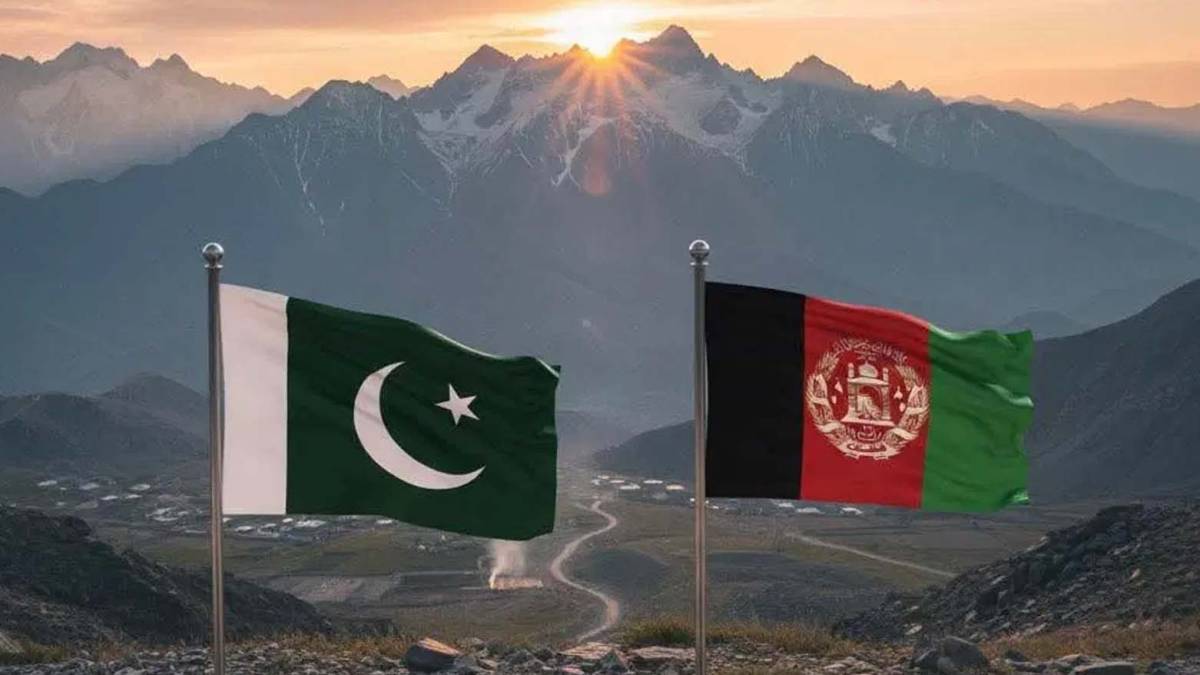
In recent years, Pakistan has increasingly found itself entangled in security, political, and even economic confrontations with neighboring countries such as Afghanistan and India. These conflicts have produced significant economic and logistical consequences, effectively disrupting the flow of goods across Central and South Asia. Persistent tensions have created serious challenges for Pakistan’s most lucrative export markets. In reality, resolving these disputes is critically important for Central Asian countries seeking access—via Afghanistan—to southern trade routes and Pakistan’s seaports, which serve as gateways to the Indian Ocean.
Despite mediation efforts by countries such as China, Qatar, and Turkey, and despite Pakistan’s recent announcement of a ceasefire with Afghanistan, Islamabad has once again resorted to inflammatory actions against the Taliban. These frictions stem from Pakistan’s flawed regional policies and its leadership’s refusal to acknowledge the evolving realities of the region. As a result, landlocked Central Asian states—actively working to diversify their trade partners and transit routes through regional and international projects—have been directly affected.
Several major economic and logistical initiatives, including the Central Asia–South Asia Corridor, the Afghan national railway, the Kazakhstan–Afghanistan rail connection, the TAPI natural gas pipeline, and the CASA-1000 electricity project, remain far from completion. Many of these projects have been delayed by crises rooted either in Pakistan’s disputes or its internal instability. The Trans-Afghan railway corridor—designed to connect Central Asia with Pakistan and India—along with the full implementation of the TAPI pipeline, has increasingly become a source of distrust, particularly for Kazakhstan, Kyrgyzstan, Uzbekistan, Turkmenistan, Tajikistan, and even Russia. This situation runs counter to the strategic interests of Uzbekistan, Turkmenistan, and Russia, creating deep uncertainty over the future of the region’s vital transit routes.
It is worth recalling that when the Taliban were recognized as an anti-terrorism partner in the joint statement by Vladimir Putin and Narendra Modi—emphasizing confidence in the Taliban’s comprehensive and effective counterterrorism efforts—Pakistan’s narrative of a “Taliban threat” was significantly weakened. Consequently, Islamabad’s attempts to isolate the Taliban lost much of their credibility. At this critical juncture, given the necessity of balancing political and economic opportunities against geopolitical risks, and considering the current realities in Afghanistan alongside the lack of a viable alternative to the existing Afghan government, Pakistan has little choice but to engage with the Taliban and recalibrate its relations accordingly.
On the other hand, although China is widely regarded as Pakistan’s strategic partner, it must be acknowledged that Beijing holds direct and substantial interests in Afghanistan. Therefore, unconditional Chinese support for Pakistan should not be assumed. Alongside China, Russia has also welcomed expanded relations with the Taliban. Through a balanced approach and within the framework of the “Moscow Format,” Russia has pursued coordinated and structured political and security initiatives on Afghanistan in cooperation with regional states and international partners. For Moscow, reliance on a single transit route to access southern markets is neither desirable nor strategically sound. Diversification of transit corridors is a geopolitical priority for the Kremlin.
Under these circumstances, escalating external tensions with Afghanistan and India—combined with internal unrest in Khyber Pakhtunkhwa and Baluchistan and a surge in terrorist attacks—have further weakened Pakistan’s regional position. The country is now witnessing a tangible decline in its geopolitical standing.
In recent months, Pakistan has endured some of its deadliest periods amid deepening domestic crises, marked by intensified militant violence and counterterrorism operations. Simultaneously, repeated border clashes with Afghanistan and allegations of Indian involvement and instigation in Baluchistan and Khyber Pakhtunkhwa have exposed Pakistan’s foreign policy to heightened vulnerabilities.
All things considered, Pakistan appears not only incapable of resolving its internal tensions but also increasingly disconnected from strategic relations with its external neighbors. Its failure to manage foreign relations, accurately assess regional dynamics, and recognize the Taliban’s regional legitimacy has produced far-reaching consequences. Pakistan is facing not merely a political crisis but, in light of recent developments, a deeper crisis of political identity—one that, fueled by misguided strategic choices, will ultimately further erode its position both regionally and globally.
Translated by Ashraf Hemmati from the original Persian article written by Navid Daneshvar
[1] https://timesca.com/tensions-simmer-between-pakistan-and-afghanistan-in-setback-for-central-asian-trade-hopes
[1] https://tn.ai/3464632
[1] https://iuvmpress.co/fa/post/%D8%AA%D9%85%D8%B1%DA%A9%D8%B2-%D8%AC%D8%BA%D8%B1%D8%A7%D9%81%DB%8C%D8%A7%DB%8C%DB%8C-%D8%AC%D8%AF%DB%8C%D8%AF-%D8%AF%D8%A7%D8%B9%D8%B4-%D8%AE%D8%B1%D8%A7%D8%B3%D8%A7%D9%86-%D8%AA%D9%87%D8%AF%DB%8C%D8%AF%DB%8C-%D8%A8%D8%B1%D8%A7%DB%8C-%D9%BE%D8%A7%DA%A9%D8%B3%D8%AA%D8%A7%D9%86
[1] https://ria.ru/20251007/afganistan-2046788910.html
[1] https://www.crisisgroup.org/asia-pacific/afghanistan/another-south-asia-cross-border-crisis-afghan-and-pakistani-forces-clash
[1] https://www.arabnews.pk/node/2625446

Comment
Post a comment for this article