 32
32
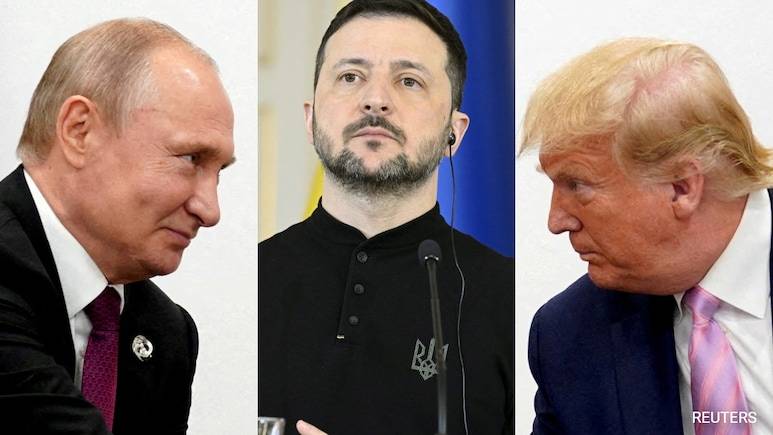
On the eve of the fourth anniversary of Russia’s special military operation in Ukraine, and amid continued fighting across multiple fronts, a new round of peace negotiations between Moscow and Kyiv—held in Abu Dhabi under U.S. mediation—ended without progress.
Now, a third round of trilateral talks among Ukraine, Russia, and the United States has begun in Geneva, Switzerland, just one week before the war enters its fourth year. Meanwhile, hostilities on the battlefield persist uninterrupted.
These key meetings, scheduled for February 17 and 18 in Geneva, were organized to outline a roadmap toward a ceasefire.
Ending the Ukraine war has been one of Donald Trump’s repeated campaign promises. He consistently claimed he could resolve the conflict within twenty-four hours. Yet one year after returning to the White House, that promise remains unfulfilled.
This reality has exposed a shift in Washington’s approach. The United States now appears to be leveraging reductions in military assistance to Kyiv while pushing for direct trilateral negotiations, increasing pressure in pursuit of ending the war before the summer of 2026.
Trump’s strategy is framed as active mediation for a ceasefire. However, numerous analysts suggest that any prospective agreement could involve territorial concessions by Ukraine. Such concessions would likely emerge under American pressure, structured as reciprocal compromise.
At the same time, the Kremlin has adjusted its negotiating team, signaling a strategy of deliberate delay aimed at extracting maximum advantage from any ceasefire arrangement.
Ukraine’s president has acknowledged that Washington has set a summer deadline for ending the war, indicating that political and economic pressure will intensify according to that timetable.
In response to the strategic vacuum created by America’s recalibration, the European Union has unveiled what many describe as a symbolic €90 billion financial package for 2026 and 2027. Of this amount, €60 billion is allocated to defense spending and €30 billion to support Ukraine’s general budget.
Within this framework, Norway has pledged €7 billion, Germany €6 billion, Sweden €3.7 billion, Denmark $2 billion, and the United Kingdom £3 billion.
Meanwhile, mounting domestic and external pressures on President Volodymyr Zelensky—stemming from corruption concerns, foreign policy limitations, and structural dependence on Western backing—have led him to propose holding presidential elections in the event of a two-month ceasefire, potentially guaranteed by the United States.
Russian President Vladimir Putin has repeatedly questioned the legal legitimacy of signing any binding agreement with Kyiv’s current leadership, arguing that Zelensky’s official term expired in May 2024 and that elections were postponed under martial law.
Many analysts now predict that internal divisions within Ukraine’s negotiating team and governing structure have become a critical factor complicating peace talks.
From Moscow’s perspective, accepting a ceasefire without securing core strategic objectives would mean forfeiting the opportunity to consolidate military gains. Russia currently controls significant territories in southern and eastern Ukraine and seeks formal recognition of these regions as part of its sovereign domain.
Even if a ceasefire or peace agreement is reached, a comprehensive and immediate end to the conflict appears unlikely. Deep disagreements remain over territorial sovereignty, the future status of the Zaporizhzhia nuclear power plant, and strategic issues such as potential NATO deployment in Ukraine.
Moreover, any shift in battlefield dynamics could directly alter negotiating positions.
The decisive question now is whether European financial backing and intensified American political pressure—aimed at securing even the most fragile form of peace—can override Moscow’s strategic calculations, or whether the conflict will continue into its fifth year under a new balance of power.
Translated by Ashraf Hemmati from the original Persian article written byNavid Daneshvar
[1] https://www.rbc.ru/story/682238259a7947b7fae1d9cf?utm_source=&utm_medium=&utm_campaign=699442819a79471d8890d3ed&utm_content=story_682238259a7947b7fae1d9cf&utm_term=
[1] https://tass.ru/politika/26467617
[1] https://zn.ua/POLITICS/perehovory-v-zheneve-zashli-v-tupik-zhurnalist-nazval-iz-za-koho.html
[1] https://prospect.com.ru/news/6433339/ek-iz-kredita-kievu-v-razmere-90-mlrd-evro-potratit-na-orugie-60-mlrd-fon-der-lyajen.html
[1] https://www.rbc.ru/rbcfreenews/698fd8329a794706447981ca

Comment
Post a comment for this article