 803
803
Donald Trump’s victory in the most recent U.S. presidential election came with a promise to “restore America’s power” and “bring the country back to strength.” For many of his voters, those slogans meant a renewed focus on domestic issues and improving economic and social conditions. Trump threw the full weight of his political capital and available tools behind this agenda.
Building on that approach, the new U.S. strategic document for the coming year reflects a shift toward prioritizing matters closer to home. The framework has already gained a nickname: the Trump Amendment. In essence, it is a modernized version of the Monroe Doctrine.
The Monroe Doctrine, authored in the 1880s under President James Monroe, defined the Western Hemisphere as America’s primary sphere of influence. Latin America was treated as Washington’s backyard, and any colonial or coercive move by the major European powers of the time was viewed as a hostile act against U.S. interests. With that logic, the United States claimed the right to intervene in or dominate Latin America and succeeded in carving out major strategic advantages across the Western Hemisphere.
Trump’s strategy follows the same logic. His objective is to shield the Western Hemisphere from rival great powers, particularly China. Anxieties in Washington have been rising over China’s intent to pressure the United States, and its potential presence in America’s backyard is seen as a serious threat. Trump’s doctrine therefore adopts an aggressive and confrontational posture, not merely toward China but toward any external power that challenges U.S. interests in the region.
Key strategic focal points include the Panama Canal, Greenland, and Venezuela.
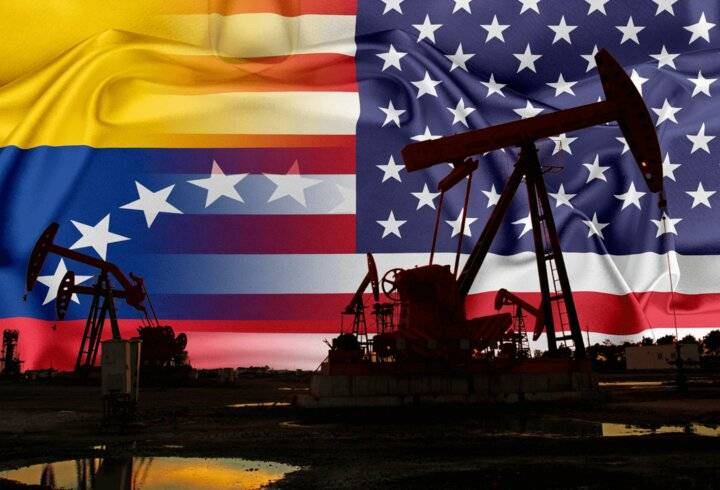
In reality, Trump’s proposed strategy is the continuation of what he promised from the beginning: prioritizing America first, reducing foreign commitments, and focusing on internal strengthening. Yet the challenge is clear. For Washington to preserve its global standing, it must maintain its hegemonic role. A crucial pillar of that hegemony is continued dominance over Latin America. This helps explain the pressure campaign against Venezuela and, before that, Panama: Washington cannot allow other powers to establish a foothold in its traditional sphere of influence.
According to the new doctrine, the United States claims the right to impose political, economic, and even military pressure on any Latin American government that forges strategic ties with non-U.S. great powers. The goal is to discourage such alliances and ensure that Washington remains their primary partner. This approach succeeded in Panama and is currently being applied to Venezuela, backed by the threat of military action.
Without this aggressive posture in its new strategic document, the United States might well lose its leverage in the region. At the same time, the strategy exposes a persistent truth: the colonial mindset remains alive within the calculus of major powers, ready to be activated whenever necessary.
To maintain its supremacy in the Western Hemisphere, the United States has shown that it will stop at nothing. Its goal is to preserve superiority not only over rivals but sometimes even over its own allies. Trump’s framework reflects this hierarchy clearly: America’s interests first, then its strategic priorities, then its tactical conveniences. Allies, if they fit into this structure, will be accommodated only to the extent that they serve U.S. needs.
This is why the new document has drawn protests from European states, who now see themselves downgraded from strategic partners to optional participants in America’s agenda. Yet it has been welcomed in Moscow, which sees in it an opportunity to manage its own vital interests and carve out an area of mutual understanding with Washington. Such cooperation could increase the chances of future agreements, including over the war in Ukraine, even if that means ignoring some of Europe’s or Ukraine’s red lines. Washington’s priorities come first.
Translated by Ashraf Hemmati from the original Persian article written by Mohammad Mahdi Esmaeil-Khanian
[1] New U.S. National Security Strategy Prioritizes Western Hemisphere | Council on Foreign Relations

Comment
Post a comment for this article