 773
773
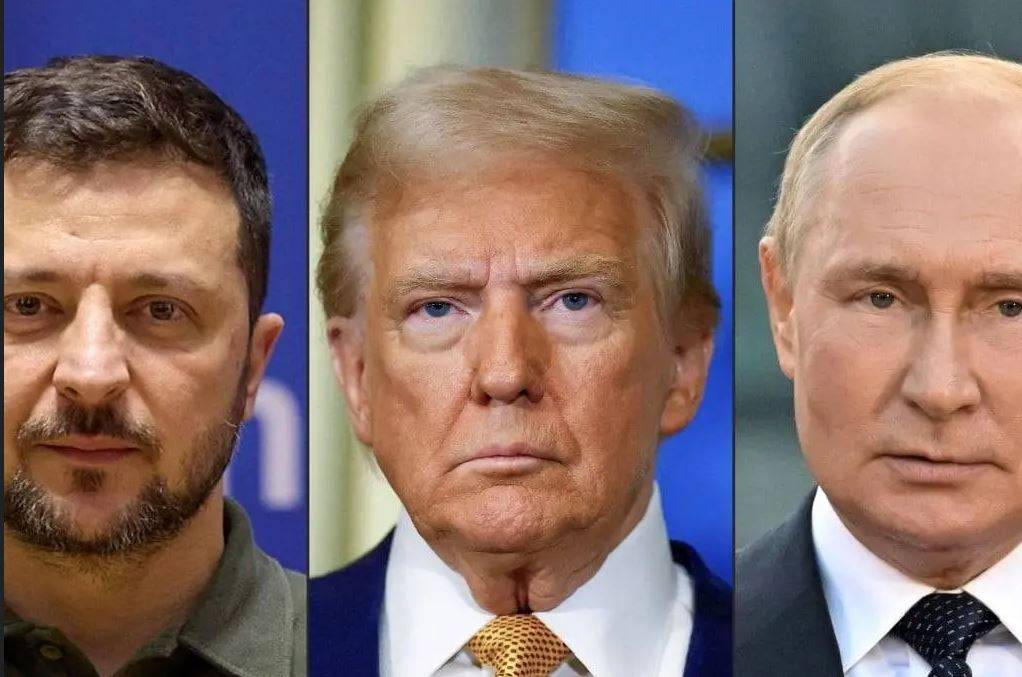
Recent developments in Ukraine have prompted Donald Trump, once again, to push a multi-layered “peace plan” designed first and foremost around American interests. Kyiv has confirmed receiving a new draft proposal from Washington, though President Zelensky has not disclosed its contents.
According to earlier reports, Oleksiy Honcharenko, a member of Ukraine’s parliament, published what he claimed was the U.S. plan on November 20. The 28-point proposal calls for Ukraine to abandon its NATO ambitions, withdraw from Donetsk and Luhansk, and formally cement its status as a non-nuclear state. Western media later circulated details of the plan.
Meanwhile, Russian sources have analyzed the proposal through Moscow’s lens. President Vladimir Putin has said the plan has not yet been discussed in detail with Russia but could serve as a starting point for negotiations. Still, Putin believes Ukraine and its European allies remain trapped in the illusion that they can force a strategic defeat on Russia and will therefore reject it.
The plan repeats long-standing Russian demands, requiring Kyiv to concede multiple major points. Yet even beyond Ukraine’s objections, several provisions are also problematic for Moscow. One especially controversial issue is the proposed 600,000-soldier cap on Ukraine’s armed forces. This would force Ukraine to shrink its current one-million-person military, leaving it even more vulnerable. At the same time, Russia has previously demanded far deeper cuts, insisting that Ukraine’s army be reduced to under 100,000 troops.
In reality, neither side can meaningfully accept this provision. Ukraine lacks the financial and demographic capacity to sustain such a force; years of war have devastated its economy and triggered the largest population displacement since World War II. Analysts estimate 5.3 million people displaced internally and nearly 7 million having fled abroad, including 4 million to the EU. With 25 to 30 percent of the population uprooted, the proposal is detached from basic demographic reality.
The plan also calls for Ukraine to permanently abandon NATO membership and recognize Crimea, Donetsk, and Luhansk as de facto Russian territory. These issues remain at the heart of the conflict, and neither Moscow nor Kyiv is willing to concede them.
On the other hand, the deadlines set by the United States for approving the 28-point framework, along with Trump’s pressure on Zelensky to endorse it quickly, are practically unattainable. A closer look at Washington’s proposal shows why. Under this plan, Ukraine would have to surrender additional territory, downsize its military, and permanently abandon any aspiration to join NATO. Such terms are viewed as unrealistic, and both European and Ukrainian officials describe the proposal as “one-sided and favorable to Moscow” and “a blueprint that would only encourage further Russian attacks” — clear signs that the plan serves U.S. interests at the expense of Europe’s.
It is also worth noting, according to informed sources, that Trump has reportedly suggested using around $100 billion of Russia’s frozen assets in Europe for Ukraine’s reconstruction, with half of the returns from those funds going to the United States. This proposal has already triggered significant controversy in political circles. As the Financial Times reports, the plan entails channeling the reconstruction funds and development loans toward American commercial projects, a prospect European governments find unacceptable and even unimaginable. All of this underscores the U.S. pursuit of profit and leverage, while leaving European partners and Ukraine itself facing a proposal that is vague, unworkable, and almost certain to spark months of political friction if pushed forward.
Taken together, the plan reflects a unilateral American agenda rather than a genuine peace initiative. It clashes with Kyiv’s and Moscow’s red lines alike and risks creating additional friction instead of resolving the conflict. Far from ending the war, the proposal threatens to unleash new disputes across an already unstable region.
Translated by Ashraf Hemmati from the original Persian article written by Navid Daneshvar
[1] https://www.rbc.ru/politics/22/11/2025/692197ce9a794763ed8638ba
[1] https://ria.ru/20251121/putin-2056705107.html
[1] https://www.gazeta.ru/politics/news/2025/11/21/27240559.shtml
[1] https://parsi.euronews.com/2025/11/20/zelenskys-office-confirmed-ukraine-has-received-a-draft-peace-plan-from-the-united-state
[1] https://www.reuters.com/world/us-peace-plan-contains-unpalatable-proposals-both-ukraine-russia-2025-11-21
[1] https://www.ilo.org/resource/news/how-did-war-impact-ukrainian-labour-market
[1] https://joint-research-centre.ec.europa.eu/jrc-news-and-updates/war-exacerbates-ukraines-population-decline-new-report-shows-2023-03-08_en
[1] https://www.aljazeera.com/news/2025/11/21/trumps-28-point-u
kraine-plan-in-full-what-it-means-could-it-work
[1] https://www.rbc.ru/politics/21/11/2025/6920bf019a79475099d7134c

Comment
Post a comment for this article