 341
341
At the beginning of the New Year, and looking back just a few months to the joint Russian–Belarusian military exercise *Zapad 2025*, one image stands out with particular clarity. Beyond the display of Russia’s advanced weaponry and the operational readiness of its armed forces, a powerful symbol dominated the scene: Vladimir Putin, President of the Russian Federation, appearing in military attire with a weapon in hand.
This was not merely the image of a political leader, but that of a commander—ambitious, battle-ready, and visibly present on the battlefield. The message was unmistakable: a clear transmission of Kremlin power directed squarely at the West.
In the months that followed, Putin’s repeated presence at strategic command centers and his direct involvement in overseeing operations in Ukraine reinforced the same signal. Russia has demonstrated a firm determination not to retreat from its current positions, instead exploiting Western hesitation to maintain and expand its advance. This approach appears designed to assert Russia’s military superiority and battlefield dominance amid rising tensions targeting the Kremlin.
Battlefield Reality vs. NATO’s Political Illusions
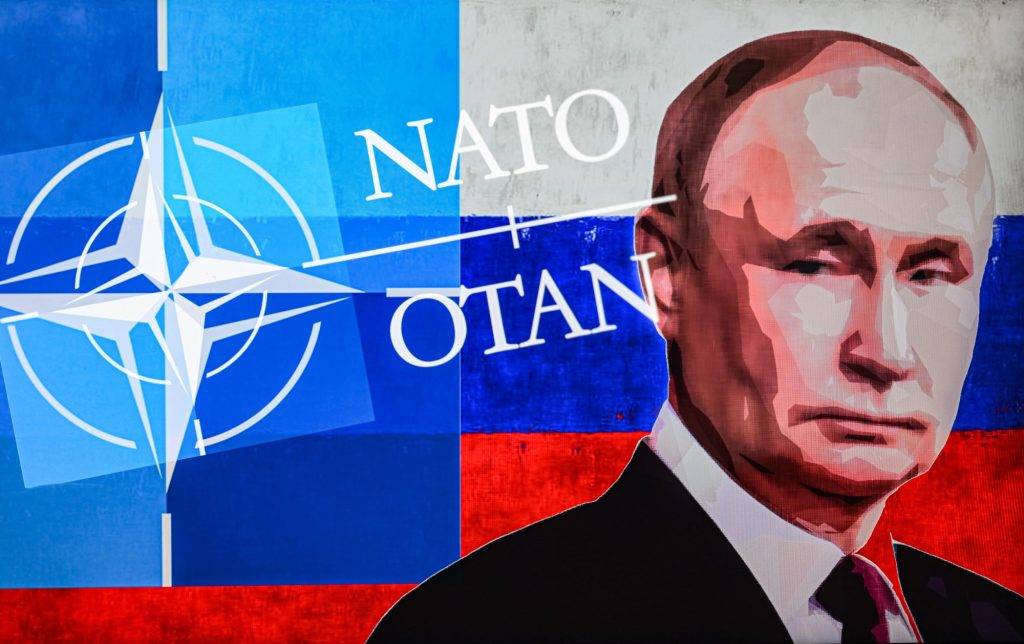
After more than 46 months of war, it has become evident that NATO members remain trapped in the illusion of delivering a decisive defeat to Russia, while simultaneously scrambling to preserve Ukraine’s viability. In contrast, Moscow is imposing new realities on the battlefield—realities that grow stronger as NATO sinks deeper into political paralysis.
Russia’s battlefield advantage, combined with NATO’s strategic deadlock, has significantly reinforced the Kremlin’s position.
Just days ago, Russian Chief of the General Staff Valery Gerasimov announced the capture of strategic areas in Donbas, confirming that Russian forces—after advancing toward predefined objectives and securing Sievierodonetsk—are now moving rapidly toward Sloviansk.
Sloviansk, long regarded as one of Ukraine’s most critical defensive strongholds in the north, has consistently been a primary target for Russian forces on the eastern front. In parallel, the capture of Siversk in the final days of 2025 marked the collapse of Ukrainian resistance in another key area, following months of attritional warfare and eventual retreat.
Strategic Momentum and the Collapse of Negotiating Leverage
As Russia reports daily military gains, Ukrainian President Volodymyr Zelensky has openly acknowledged that Ukraine lacks the capability to retake Crimea or other territories under Russian control. Many analysts believe these developments are fundamentally reshaping the prospects and parameters of peace negotiations.
Under these conditions, Moscow’s willingness to offer concessions in exchange for Ukrainian withdrawals has effectively dropped to zero. Instead, Russia continues its policy of military advancement, with forces pushing swiftly toward Sloviansk and deeper into Ukrainian territory.
Operations aimed at “liberating” the Donetsk and Luhansk People’s Republics, as well as the Zaporizhzhia and Kherson regions, remain ongoing. At the same time, Russia is expanding its security depth along additional axes, including Sumy, Kharkiv, and Dnipropetrovsk. The Kremlin appears to be systematically creating and enlarging a security buffer zone while advancing toward its strategic objectives.
NATO’s Paralysis, Russia’s Imposed Reality
In conclusion, under the shadow of NATO’s political and military deadlock—rooted in what can only be described as strategic delusion—Russia continues to advance deeper into Ukrainian territory. By establishing and expanding security zones, Moscow is rapidly moving toward Sloviansk, while its appetite for compromise at the negotiating table steadily diminishes.
Russia has successfully maximized its battlefield advantage in response to Western hesitation, bringing it closer to its core objectives. The reality is increasingly clear: Russian forces are penetrating Ukraine’s defensive lines and fortified positions with notable success, while NATO remains unable to reach a unified or decisive strategy.
As the West debates, Russia acts—and in war, it is the battlefield, not conference rooms, that ultimately defines the outcome.
Translated by Ashraf Hemmati from the original Persian article written by Navid Daneshvar
[1] https://iuvmpress.co/fa/post/%D8%B1%D8%B2%D9%85%D8%A7%DB%8C%D8%B4-%D8%B2%D8%A7%D9%BE%D8%A7%D8%AF-%DB%B2%DB%B0%DB%B2%DB%B5-%D9%87%D9%85%DA%AF%D8%B1%D8%A7%DB%8C%DB%8C-%D8%B1%D9%88%D8%B3%DB%8C%D9%87-%D9%88-%D8%A8%D9%84%D8%A7%D8%B1%D9%88%D8%B3-%D8%AF%D8%B1-%D8%B3%D8%A7%DB%8C%D9%87-%D8%A8%DB%8C%D9%85-%D9%86%D8%A7%D8%AA%D9%88
[1] https://www.interfax.ru/russia/1065689
[1] https://www.aa.com.tr/en/russia-ukraine-war/zelenskyy-says-ukraine-lacks-strength-to-push-russia-to-borders-of-1991/3399460
[1] https://www.rbc.ru/politics/11/12/2025/693ad79b9a79478544b82c4c

Comment
Post a comment for this article