 631
631
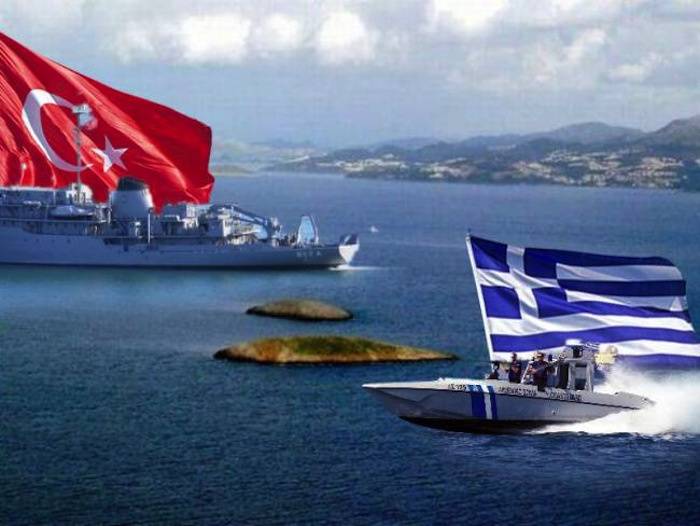
Rising tensions between Turkey and Greece in recent years have grown more complex and more consequential. Although both are NATO members, the Western powers clearly don’t view them equally. Greece now occupies a far more strategic place in the West’s political playbook, backed directly by the United States and France. This isn’t accidental. It reflects a deep historical anxiety: Western governments fear Turkey’s expansionist ambitions far more than anything Athens might do.
What began as a routine neighborly dispute has evolved into a multi-layered regional confrontation. At the center of it lies Turkey’s “Blue Homeland” doctrine, a bold maritime strategy that redraws the country’s claims over territorial waters and continental shelves. It effectively allows Ankara to extend its reach from the Black Sea and the Aegean all the way to the Eastern Mediterranean, enabling it to challenge Greece, Cyprus, and even Israel. To anchor these claims, Turkey struck a maritime agreement with Libya, expanding its operational footprint across the region.
The motive is straightforward: energy. Turkey seeks access to the fossil-fuel reserves across the Mediterranean and Aegean, aiming to position itself as a major energy provider in a rapidly shifting global landscape. The Blue Homeland doctrine not only justifies Turkish exploration rights, but also grants Ankara the pretext for large-scale military exercises in contested areas. These moves, however, come at a cost. They have amplified Western fears about Turkey’s broader ambitions and helped solidify a regional bloc aligned against Ankara.
This emerging bloc—Greece, Cyprus, and Israel—now sees Turkey as a shared strategic challenge. Greece and Cyprus fear territorial encroachment, while Israel faces competition with Turkey over Syria and the broader regional order. Their cooperation, which proved highly effective during the recent 12-day conflict involving Tehran, has encouraged Western powers to double down on supporting this Mediterranean Arc, viewing it as a vital tool for containing Turkey’s geopolitical aspirations. Strategically, this arc sits at a perfect vantage point for the West to keep pressure on Southwest Asia, Turkey, Russia, and even China while avoiding direct confrontation.
Turkey, for its part, isn’t sitting idle. It is working to counter this bloc through active diplomacy and military modernization—from seeking F-35 fighter jets to expanding cooperation with Tehran and even Riyadh. Ankara is also maintaining close ties with Moscow, a relationship that deeply worries Europe, which fears that Turkey could drift permanently from the Western camp and jeopardize Europe’s energy security. Turkey’s back-and-forth maneuvering between East and West gives it leverage in nearly every regional negotiation.
Western governments view cooperation between Turkey and Iran as temporary and tactical, rooted in short-term interests. But if both countries were to reach a deeper strategic understanding—particularly over the Mediterranean and the Black Sea—they could reduce long-standing regional tensions and build a powerful joint bloc. A bilateral security pact between Ankara and Tehran, coupled with expanded defense cooperation, could create a robust regional shield and inspire other actors, including Saudi Arabia, to join. Such alignment would dramatically boost regional autonomy against external powers.
Ultimately, Turkey needs close coordination with regional partners to counter the Mediterranean Arc and safeguard its strategic future. Without it, Ankara risks losing critical maritime space and enabling Greece to capitalize on contested resources. For Iran, deeper cooperation with Turkey offers a renewed path back into the Mediterranean and the chance to reassert itself as a meaningful actor in the Eastern Mediterranean.
Translated by Ashraf Hemmati from the original Persian article written by Amin Mahdavi
[1] Turkey is escalating tensions in the Mediterranean (again)
[1] Twenty questions (and expert answers) on the Israel-Iran war - Atlantic Council
[1] Greece's Missile Plans in the Aegean Raise Alarm in Turkey - GreekReporter.com

Comment
Post a comment for this article